Undergraduate Seminar on Topology and Physics
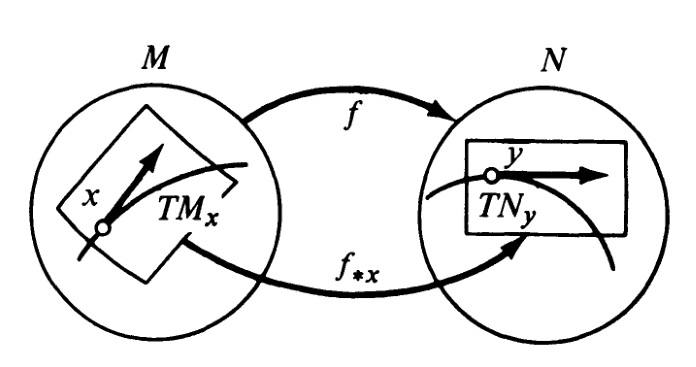
Figure 64: Derivative of a mapping [Arnold]
Abstract:
The goal of the semester will be to understand the concept of a smooth manifold and how it can be used in geometric descriptions of physical problems. The first half will be a leisurely introduction to the basic objects of differential topology: manifolds, vector fields, and differential forms. Once we’re comfortable with these new concepts we’ll learn how to describe Lagrangian and Hamiltonian mechanics in these terms. If time permits, we will also discuss electromagnetism.
Prerequisites:
A strong background in multivariable calculus and linear algebra. Basic knowledge of point-set topology (open sets, continuous maps, etc) will be helpful.
Syllabus: pdf.
Time: Mondays and Wednesdays 2:40-3:55pm
Location: Math 622
Quiz: Problems. Solutions.
Announcements:
- There will be no class on: 9/21, 10/12, 11/2, 11/23, 11/25.
Schedule:
- September 14: (Felix Roz)
Topological manifolds.
A manifold is a space which can be given linear (Euclidean) coordinates near every point, but might be non-linear as a whole. They are constructed by ``gluing'' together open discs along smooth functions of real variables. In the first talk I will make these ideas precise and give lots of examples including spheres, tori, and projective spaces. References: [Tu 5.1, 7.7]. Notes. - September 16: (Felix Roz)
Smooth manifolds.
A smooth manifold is a topological manifold with smoothly compatible charts. Such compatibility allows us to define smooth functions on manifolds. We will also discuss products, submanifolds and gluing constructions. References: [Tu 5.2-4, 6.1-5]. Notes. - September 23: (Carmen Alves Sabin)
Tangent spaces.
The main topic will be tangent spaces, which extend the notion of vectors and derivatives from Euclidean spaces to smooth manifolds. We will define tangent vectors, tangent spaces, and the definition of a derivative as a linear map between tangent spaces to establish the chain rule. We will then introduce the constant rank theorem, and use it to derive the level-set and regular value theorems. These results help in the construction of smooth manifolds (and submanifolds) as level sets. We will finally go through with examples, including spheres and matrix groups. References: [Tu 8,11; Do Carmo Ch 0]. Notes. - September 28: (Ankita Chatterjee)
Vector fields.
Unlike the Euclidean space, a manifold can be curved in nature, so its tangent vectors at different points belong to different tangent spaces. Vector field allows us to describe direction or motion across a manifold by assigning a specific tangent vector to every point. We can apply these to think of derivations on smooth functions and to trace a function by following the vector field’s assigned tangent vectors. References: [Tu 14]. Notes. - September 30: (Jonah Stockwell)
Differential forms.
Motivated by the differential of a real-valued function on a manifold and our intuition from multivariable calculus, we introduce the cotangent bundle and differential 1-forms. We explore how differential forms allow us to take particular area-like measurements on a manifold. We then generalize to k-forms and develop the wedge product and the exterior derivative. Finally, we see how the exterior derivative beautifully generalizes and unifies the operations of gradient, curl, and divergence from multivariable calculus. References: [Tu 17-19]. Notes. - October 5: (Lilly Montelle)
Integration.
Within the context of smooth manifolds, we will discover that it is indeed possible to integrate differential forms. Utilizing Stokes’ Theorem we will learn how this is achieved through a formal and precise definition of integration. This process establishes three components: volume forms, pullbacks, and partitions of unity. We will first propose a function on S2 to integrate, and then walk through each step - identifying and overcoming obstacles using notions from calculus. To conclude, we will discuss the broader implications of Stokes’ Theorem across the mathematical field. References: [Tu 23]. Notes. - October 7: (Ryan Chen)
Riemannian metrics.
A vector space does not have a built-in notion of length or angle, but a Riemannian metric gives one by smoothly assigning an inner product to each tangent space of a manifold. We will define Riemannian metrics and give examples on R2, circles, and spheres, then use the metric to measure lengths of curves, and, if time permits, discuss volume forms, the relationship between vector fields and 1-forms, and gradients. Notes. - October 14: (Yousif Elhag)
Newtonian mechanics
References: [Arnold 4-8]. - October 19: (Thaddaeus Kiker)
Lagrange and Hamilton's equations
References: [Arnold 12-15]. - October 21 (Felix Roz):
Lagrangian mechanics on manifolds
References: [Arnold 16-19]. - October 26 (Sharon Suen):
Noether and D'Alembert's principles
References: [Arnold 20-21]. - October 28:
Oscillations I
- November 4:
Oscillations II
- November 9:
Rigid Bodies I
- November 11:
Rigid Bodies II
- November 16:
Symplectic Manifolds I
- November 18:
Symplectic Manifolds II
- December 30:
Canonical Formalism I
- December 2:
Canonical Formalism II
- December 7:
- December 9:
- December 14:
References:
- [Tu] Loring W. Tu. An Introduction to Manifolds, 2011.
- [Milnor] John W. Milnor. Topology from the Differentiable Viewpoint, 1965.
- [GP] Victor Guillemin, Alan Pollack. Differential Topology, 1974.
- [Lee] John M. Lee. Introduction to Smooth Manifolds, 2012.
- [Spivak] Michael Spivak. A Comprehensive Introduction to Differential Geometry: Volume 1, 1999.
- [Spivak] Michael Spivak. Physics for Mathematicians: Mechanics I, 2010.
- [BottTu] Raoul Bott, Loring W. Tu. Differential Forms in Algebraic Topology, 1982.
- [Arnold] V. I. Arnold. Mathematical Methods of Classical Mechanics, 1974.